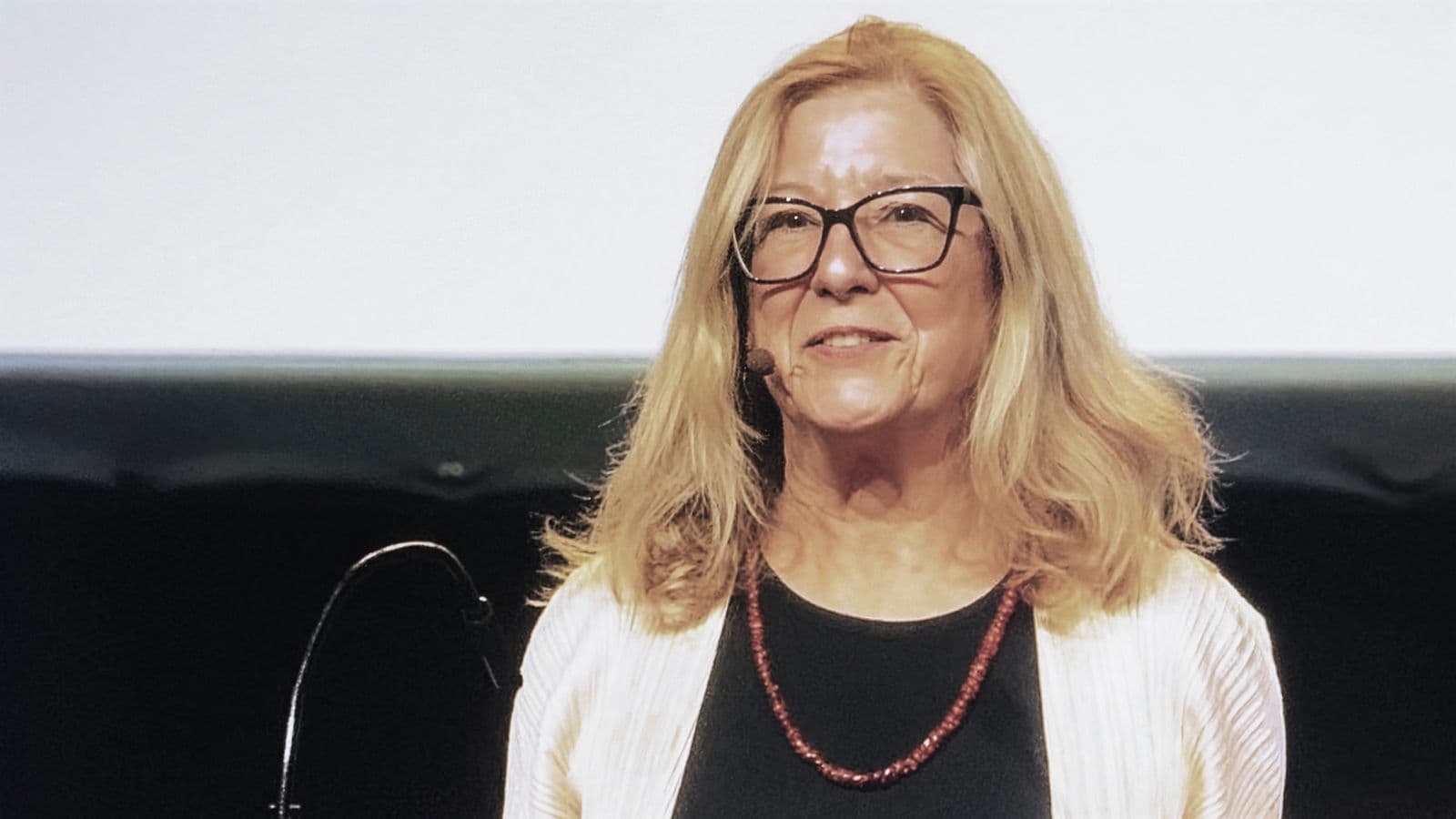
Charalampos Tzoulis: Fighting for a Breakthrough in Parkinson’s Disease
Charalampos Tzoulis may very well be one of the hardest-working scientists in the field of Parkinson's research. His single goal: Achieving the first real breakthrough.
The information in this article is for educational purposes only and is not intended as medical advice. Always consult a qualified healthcare professional for medical questions.
The room is quiet. Not the casual, chatty kind of silence that often fills a conference hall before a lecture begins. It is a different kind of silence. The Norwegian Parkinson’s Association has invited people living with a serious diagnosis, and in the room hang the questions everyone has come to find answers to:
Is something new coming soon? A breakthrough, a treatment that can actually slow the disease? What will life be like from here on?
For the people here, time is of the essence. How quickly will the body fail? How long can one walk without assistance? How long can one write, button a shirt, hold a child or grandchild in one’s lap?
“Today isn’t about the big breakthrough. It’s about achieving a first breakthrough. We haven’t had that yet.”
On stage stands Professor Charalampos Tzoulis, one of the leading voices in Parkinson’s disease research internationally. His work has earned multiple prizes and distinctions, and he is leading several of the most innovative initiatives in the search for new treatments for Parkinson’s disease.
In Norway, Tzoulis has built a research environment that is not only among the strongest in the Nordic region, but also among the most prominent in the world. The Neuro-SysMed Center for Clinical Treatment Research in Neurological Diseases and K.G. Jebsen Center for Parkinson’s disease, both led by Tzoulis, have become a hub for international research on disease mechanisms biomarkers and innovative clinical trials.
For many in the audience, Tzoulis is more than a researcher. He is a source of hope. At the same time, Tzoulis is a man who speaks with a blend of precision and unflinching pragmatism. No headline-grabbing promises. No quick wins. Quite the opposite.
“We still haven’t had a single therapeutic breakthrough other than symptom management. Despite decades of research we still lack a disease-modifying treatment for Parkinson’s disease – meaning a treatment that can delay or stop the rate of neurodegeneration and disease progression. That tells us something important: we are still missing part of the picture. We need to think differently, challenge our assumptions, and learn from the many disappointments the field has already faced.”
Also in Profiles
Roger Barker: Beyond the “Breakthrough”
“I don’t think we need a cure,” neuroscientist Roger Barker said. “If you can slow it down by 50 percent and pick people up early on, you’ve probably done it.”
Jimmy Choi at WPC2026: Why Exercise Has Become the Field’s Most Urgent Medicine
Despite decades of research and billions invested, scientists still cannot stop Parkinson’s disease. For now, says endurance athlete and Parkinson’s advocate Jimmy Choi, the most effective intervention available may be something far less futuristic than many has hoped for: Exercise.

Anders M. Leines: After the Image Changed
For more than a decade, Anders M. Leines has documented Parkinson’s from the inside. First, he wanted to change how the disease was seen. Ten years later, he returned to the same people, and found a darker story about time and identity.