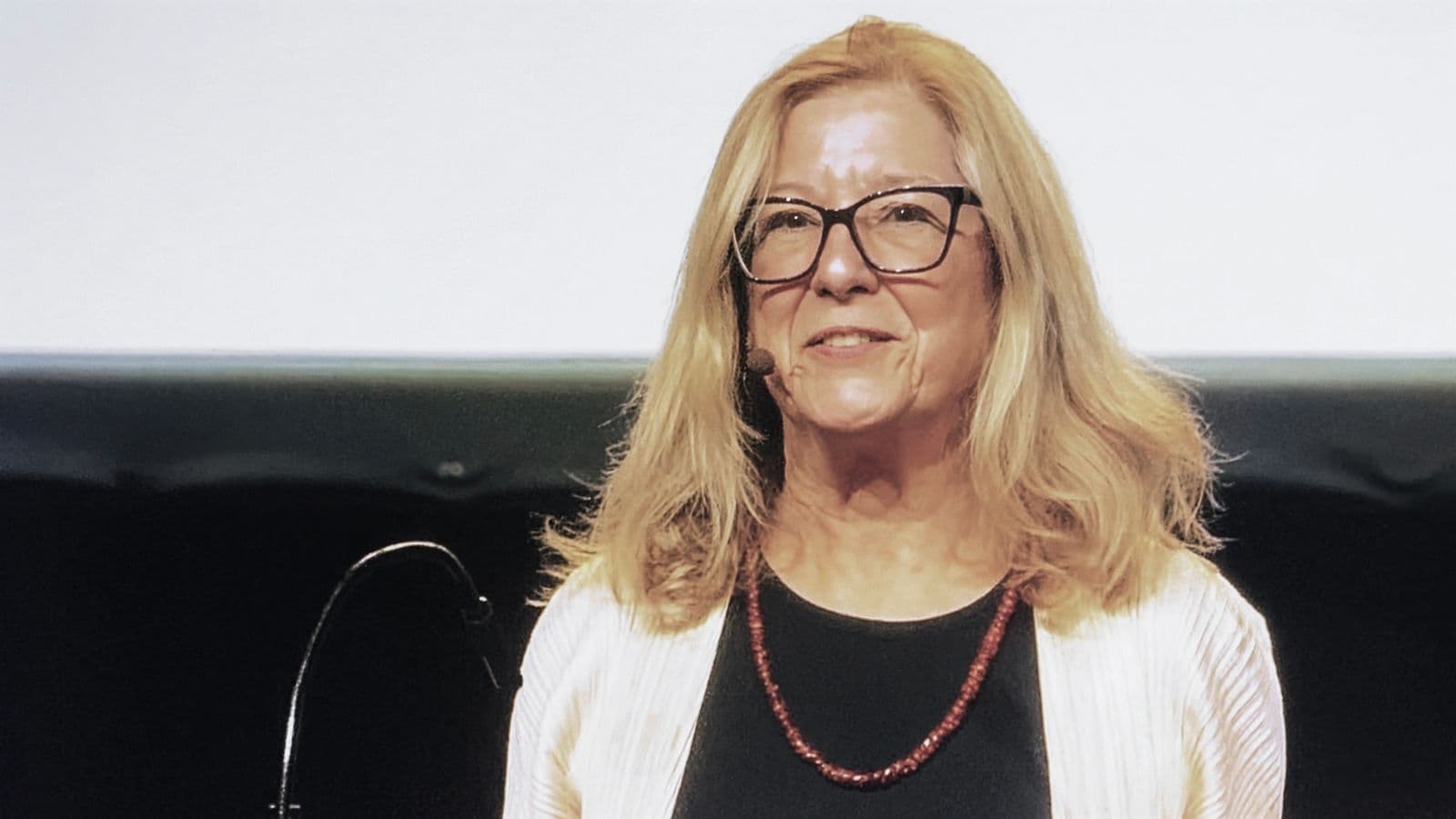
“Are we at a point where we can take those non-motor symptoms and know for sure that everyone is going to get Parkinson’s?” Henchcliffe asked.
The answer, at least for now, remains no.
That uncertainty helps explain why neurologists remain reluctant to formally diagnose Parkinson’s before classical motor symptoms emerge. Instead, the field is slowly moving toward something closer to probabilistic medicine - estimating biological risk rather than assigning rigid labels.
Patients with REM sleep behavior disorder, severe smell loss or strong genetic predisposition may eventually become candidates for monitoring, biomarker screening or preventive intervention long before traditional diagnosis. That possibility could fundamentally alter the structure of neurology itself.
Traditionally, neurological diseases are often diagnosed only after substantial neuronal damage has already occurred. Parkinson’s may become one of the first major neurodegenerative diseases where intervention begins during prodromal or preclinical phases.
“Wouldn’t it be wonderful,” Henchcliffe said, “if I could provide an early diagnosis to someone who perhaps they’ve just noticed an initial tremor but really nothing else, and if I could give them something to stop that progressing?”
But building that future requires something medicine still largely lacks: reliable biological infrastructure. Researchers still do not possess sufficiently precise biomarkers, imaging systems or predictive models capable of determining who will develop disease, when progression will occur or which therapies may work for which patients. The complexity becomes even greater once researchers begin to suspect they may not be studying one disease process at all.
Why Clinical Trials Keep Failing
That biological heterogeneity may also help explain one of the field’s deepest frustrations: the repeated collapse of disease-modifying clinical trials. Again and again, promising therapies targeting mitochondrial dysfunction, oxidative stress, inflammation or alpha-synuclein aggregation have failed to produce clear clinical success.
Henchcliffe remembers believing early in her own career that mitochondrial therapies might fundamentally alter Parkinson’s progression.
“I was really convinced that high-dose coenzyme Q10 was the way to go,” she said. “We could fix it in mice, then shouldn’t we be able to stop Parkinson’s progressing?”
The therapy ultimately failed. But increasingly, researchers suspect such failures may partly reflect trial design itself. If Parkinson’s patients grouped together under one diagnosis actually represent multiple biological subtypes, then therapies effective for one subgroup may disappear statistically inside larger heterogeneous populations.
“Some people with Parkinson’s sure have mitochondrial dysfunction and some don’t,” Henchcliffe said. “And we talk about inflammation and some have inflammation and some don’t.”
Genetics may become one route toward that future. Parkinson’s-linked mutations such as LRRK2 and GBA are increasingly being studied not merely as risk factors, but as biologically distinct disease processes potentially requiring different therapeutic strategies.
The future, Henchcliffe believes, will likely involve combinations of therapies matched to underlying biology rather than singular universal treatments.
The Human Problem of Neurology
Despite the discussion of biomarkers, genetics and regenerative medicine, Henchcliffe repeatedly returned to something more difficult to quantify: the lived variability of patients themselves. As a practicing movement-disorders neurologist, she still spends time in clinic every week.
“I really enjoy having my clinic,” she said, “because rather than reading in research papers or listening to people who are teaching about Parkinson’s, I hear it from the person.”
That perspective has made her cautious about relying too heavily on brief examinations, clinical scales or isolated neurological snapshots.
Some patients appear healthy during clinic visits while privately struggling with exhaustion, anxiety or disabling non-motor symptoms invisible during standard assessments. Others unconsciously “perform wellness” during medical appointments.
“We get snapshots,” Henchcliffe said. “We don’t get the entire picture.”
That limitation increasingly shapes how researchers think about future monitoring technologies:
continuous data collection, wearable devices, longitudinal biomarkers and more individualized approaches to disease tracking. Because one of the deepest problems in Parkinson’s research may be that the disease often behaves differently in everyday life than it does inside clinics, trials or neurological scoring systems.
That complexity may ultimately become one of the defining challenges of the next era of neurology itself: how to build biologically precise medicine around diseases that remain profoundly individual in how they are experienced.
And how to intervene early enough that Parkinson’s, at least in its most debilitating forms, may someday never fully arrive at all.