Editor’s Note: Why We’re Building The Initiative
How we accidentally became the founders of a Magazine.
The information in this article is for educational purposes only and is not intended as medical advice. Always consult a qualified healthcare professional for medical questions.
I did not set out to start a magazine. Three years ago, I was diagnosed with Parkinson’s disease. Like most people, I had only a vague understanding of what that meant - tremor, stiffness, something progressive. I did not have a language for it. I did not have a map. So I did what I have always done when confronted with complexity: I started reading.
At first, it was fragmented. Articles, summaries, scattered studies. Then it became systematic. Scientific papers. Clinical trials. Review articles. I began collecting them, organizing them, trying to understand how they connected to one another. The number grew quickly. Hundreds of papers. Then thousands.
At some point, I realized I was no longer simply reading about Parkinson’s. I was trying to build an internal model of the disease itself - not only what Parkinson’s is, but also what it is not. How much uncertainty still remains. And this uncertainty matters more than most people realize.
Parkinson’s is now widely described by researchers as the world’s fastest-growing neurological disease. For those living with it, the disease reshapes everyday life in ways that are difficult to fully understand from the outside. It affects movement, sleep, cognition, mood, autonomy and identity. It alters not only how people function, but how they move through the world socially, professionally and psychologically. For many patients, the experience eventually produces something else as well: urgency.
When faced with a progressive disease survival instincts emerge. Some people begin searching relentlessly for information, treatments, strategies, structure - anything that might preserve function, independence or time. Increasingly, patients are forced to become active participants in navigating their own disease.
Also in Parkinson's Disease
Claire Henchcliffe: Rebuilding the Parkinson’s Brain
Parkinson’s treatment has so far largely meant replacing lost dopamine. Neurologist Claire Henchcliffe is helping test a far more ambitious idea: rebuilding damaged brain circuits themselves.
Bas Bloom: The Era of Personalized Parkinson's Has Begun
For one of the world’s leading Parkinson’s researchers, Bas Bloem, the future of the field begins with a radical shift in perspective: Parkinson’s is not one disease, but millions.
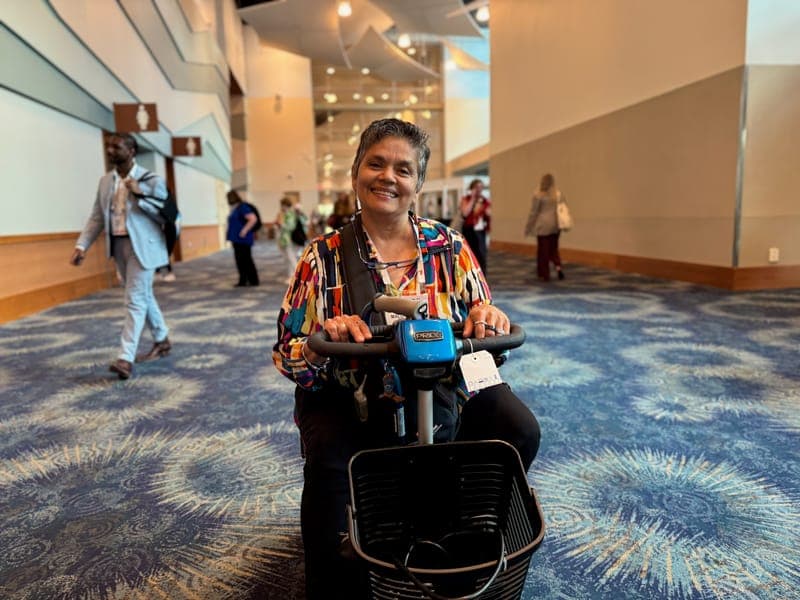
The New President of WPC: Malú Gámez Tansey - This is the Beginning of the End
Parkinson’s disease has long been understood through dying neurons and misfolded alpha-synuclein. Neuroscientist Malú Gámez Tansey believes chronic inflammation may be one of the central forces driving the disease.